

The Gorongosa Rainforest & Sky Islands
Why the Gorongosa Rainforest and Sky Islands Matter in 2026
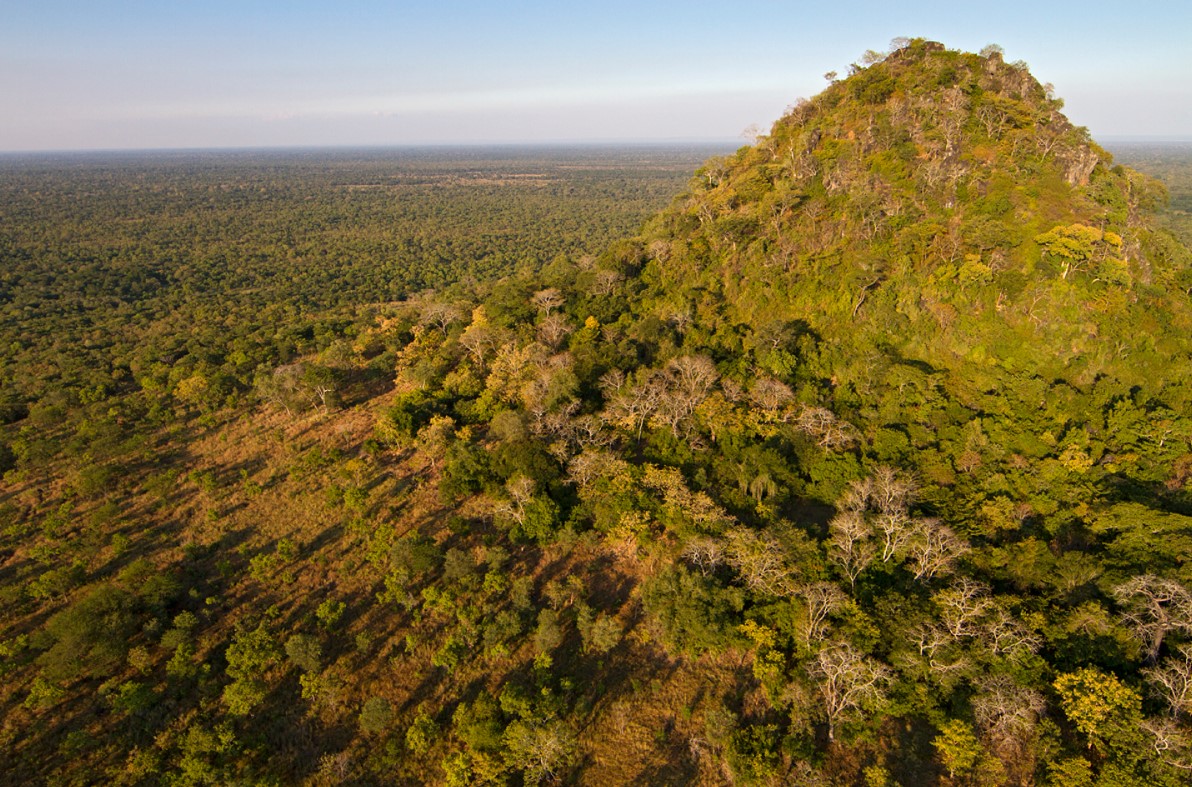
The Gorongosa Rainforest and Sky Islands represent one of Africa’s most remarkable and least understood ecosystems. Rising above the floodplains of Gorongosa National Park, Mount Gorongosa forms a dramatic green massif where altitude, rainfall, and isolation have created a biodiversity hotspot unlike anywhere else in Southern Africa.
In 2026, the Gorongosa Rainforest and Sky Islands are increasingly recognised for their global ecological importance. These elevated forest systems act as natural water towers, climate stabilisers, and refuges for species found nowhere else on Earth. Their protection is not only central to Gorongosa’s conservation success, but to the long term health of the entire park and surrounding communities.
For travellers, this region offers a deeper understanding of Gorongosa beyond classic safari landscapes. It tells a story of restoration, science, and resilience that few destinations in Africa can match.
What Are Sky Islands and Why Gorongosa Is Unique
Sky islands are isolated mountain ecosystems surrounded by vastly different lowland environments. In Gorongosa, Mount Gorongosa rises abruptly from savanna and floodplain, creating cooler temperatures, higher rainfall, and dense rainforest conditions at altitude.
This isolation allows species to evolve independently over thousands of years. As a result, the Gorongosa Rainforest and Sky Islands support rare plants, insects, amphibians, and birds that do not occur elsewhere in Mozambique. Scientists often compare the ecological importance of Gorongosa’s sky islands to those found in East Africa or Madagascar, but with far less human disturbance.
What makes Gorongosa unique is the way these sky islands feed life below. Rain captured by the mountain forest flows into rivers that sustain floodplains, grasslands, and wildlife across the park.
The Gorongosa Rainforest Ecosystem
The rainforest on Mount Gorongosa is lush, dense, and layered, with towering trees, moss covered branches, and rich undergrowth. High annual rainfall creates permanent streams and misty conditions that support complex plant communities.
This ecosystem plays a critical role in regulating water flow into Gorongosa’s lowlands. During the dry season, the rainforest continues releasing water slowly, preventing extreme drought conditions on the plains. During the wet season, it helps reduce flooding by absorbing heavy rainfall.
The rainforest also acts as a carbon sink, contributing to climate regulation at a regional level. Its protection is therefore as important for climate resilience as it is for biodiversity.
Rare and Endemic Species of the Sky Islands
Scientific research over the past decade has revealed an extraordinary concentration of endemic species within the Gorongosa Rainforest and Sky Islands. New species of butterflies, frogs, snakes, and plants have been identified, many of which exist nowhere else.
Birdlife is particularly notable, with forest dependent species thriving in the canopy and understory. Amphibians benefit from the constant moisture and stable temperatures found at altitude. Insects display remarkable diversity, making the region a living laboratory for evolutionary science.
These discoveries have reshaped how conservationists view Gorongosa. The park is no longer seen only as a savanna recovery story, but as one of Africa’s most important biodiversity reservoirs.
Community Conservation and the Rainforest
The protection of the Gorongosa Rainforest is closely tied to surrounding communities living on the mountain slopes. Historically, deforestation occurred due to poverty driven agriculture and limited alternatives.
In 2026, community based conservation programs form the backbone of rainforest protection. Gorongosa National Park works with local farmers to introduce sustainable agriculture, reforestation projects, and alternative livelihoods that reduce pressure on forest resources.
Education programs focus on the value of the rainforest for water security, food production, and long term stability. This integrated approach ensures conservation is not imposed, but shared and supported by those who depend on the land.

Scientific Research and Global Importance
Gorongosa has become a hub for scientific research, drawing ecologists, climatologists, and evolutionary biologists from around the world. The rainforest and sky islands are central to this work.
Researchers study climate change impacts, species adaptation, and ecosystem restoration within the mountain environment. Data collected here contributes to global understanding of how isolated ecosystems respond to environmental pressure.
In 2026, Gorongosa is widely cited as a model for conservation driven by science, community partnership, and long term vision.
Experiencing the Gorongosa Rainforest as a Traveler
While the rainforest is primarily protected for conservation and research, guided experiences allow visitors to appreciate its importance. Hiking routes on Mount Gorongosa introduce travellers to forest ecology, birdlife, and panoramic views across the park.
These experiences are not mass tourism activities. They are carefully managed, educational, and designed to deepen understanding rather than provide entertainment. Visitors leave with a greater appreciation for the complexity of Gorongosa’s ecosystems and the work required to protect them.
For travellers interested in conservation, biodiversity, and meaningful travel, this aspect of Gorongosa is often the most memorable.
How the Rainforest Supports the Entire Gorongosa Ecosystem
The Gorongosa Rainforest is the ecological engine of the park. Its water systems feed rivers, wetlands, and floodplains that sustain large herbivores and predators below.
Without the rainforest, Gorongosa’s famous plains would not recover as they have. This connection between mountain and savanna is what makes Gorongosa a complete ecosystem rather than a collection of habitats.
Understanding this relationship is key to understanding why Gorongosa’s recovery has been so successful and why its protection matters far beyond park boundaries.
Why the Sky Islands Elevate Gorongosa Above Traditional Safaris
Most safari destinations focus on wildlife density and iconic species. Gorongosa offers something different. It provides ecological depth.
The presence of rainforest and sky islands adds scientific, educational, and conservation value that few parks can match. Travellers are not just observing animals, but learning how ecosystems function, recover, and sustain life.
In 2026, this depth increasingly attracts travellers who want more than sightings. They want understanding, context, and connection.
Explore Gorongosa’s Rainforest and Sky Islands With Expert Guidance
Gorongosa’s rainforest and sky islands are best appreciated with context and expert insight. Mozambique Travel has over 20 years of experience arranging Gorongosa journeys that go beyond traditional safaris, connecting travellers with the park’s conservation story, scientific importance, and diverse ecosystems. Our specialists design itineraries that include the right lodges, knowledgeable guides, and meaningful experiences that deepen understanding of Gorongosa’s most extraordinary landscapes. Speak to Mozambique Travel to plan a 2026 Gorongosa journey shaped by purpose and discovery.